
A Journey Through Uncertainty
Over the past 35+ years of my professional journey—spanning industries like banking, corporate operations, insurance, healthcare, and the last 12 years as a business consultant and coach—one word has consistently remained at the heart of every strategic discussion: RISK.
Whether in boardrooms or in front-line operations, risk has always been the axis around which all decision-making revolves. This raises a fundamental question:
Why is Risk So Critical in Banking, Insurance, and Business in General?
To understand this, let’s begin with the basic definition of risk. Leading dictionaries such as Merriam-Webster, Oxford English Dictionary, and Collins define RISK as:
“The possibility of loss, injury, or other adverse effects. It also refers to exposure to danger or the chance of something negative happening.”
In essence, risk is uncertainty—a central theme not only in finance but across every sphere of life and business.
The Fundamental Questions About Risk
That brings us to two essential follow-up questions:
- Can risk be calculated?
- Can we prevent the loss associated with it?
These questions have been the focus of decades of research, strategic models, and professional debate. Here’s a brief look at how renowned thought leaders—both international and from the Arab world—have approached risk from various perspectives:
Global Thinkers on Risk
- Peter L. Bernstein (Against the Gods)
Explores the historical evolution of risk and how humans learned to measure and manage it. Bernstein sees risk as a necessary instrument for progress, not something to fear. - Douglas Hubbard (The Failure of Risk Management)
A strong critic of traditional risk matrices, Hubbard advocates for data-driven and quantitative approaches to managing risk, exposing how flawed models often lead to costly decisions. - Frank H. Knight (Risk, Uncertainty, and Profit)
Distinguished between measurable risk (which can be calculated) and uncertainty (which cannot). He argued that profit is the reward for effectively managing uncertainty.
Arab Thought Leaders on Risk
- Dr. Tareq Al-Suwaidan
Known for his work in leadership and strategy, he emphasizes that understanding and planning for risk is vital for successful long-term transformation, especially in unpredictable markets. - Dr. Ibrahim Elfiky
Approaches risk from a personal development perspective, encouraging individuals to embrace calculated risk as a path to growth—both in life and business. - Dr. Ziad Bahaa-Eldin
An economic and legal scholar who writes extensively on regulatory and financial sector risks, advocating for strong governance to manage institutional uncertainty. - AAOIFI (Accounting and Auditing Organization for Islamic Financial Institutions)
Provides Shari’ah-based risk management guidelines, particularly concerning gharar (excessive uncertainty), a key concept in Islamic finance aimed at ensuring fairness and ethical business conduct.
The Common Thread: Risk as Foundation
While each author or institution looks at risk from a different angle,financial, psychological, legal, or ethical, they all agree on one thing:
Risk is not just a variable; it is the foundation upon which opportunity, growth, and value are built.
Before You Take the Leap: Essential Risk Reflection Questions
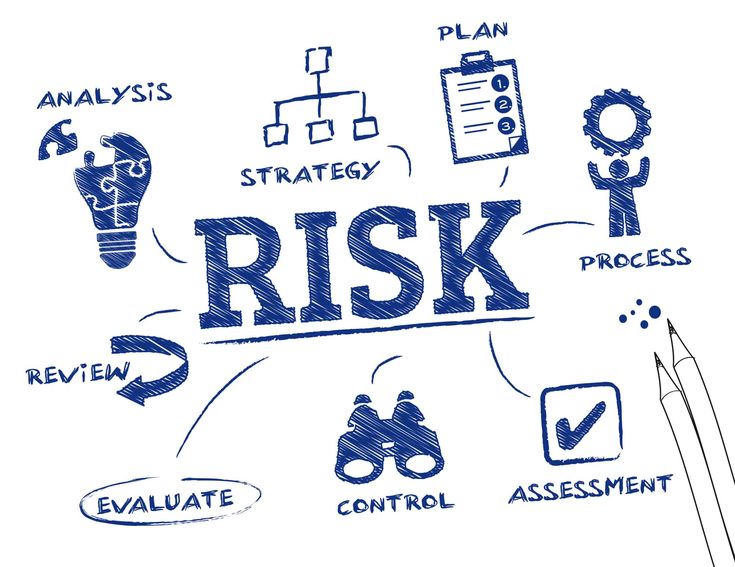
When engaging in any new or renewed business initiative or any significant matter in our lives consider asking these critical questions:
- Why are we doing this?
Clarify your true motivation and desired outcome. - What do we expect to gain?
Quantify the potential benefits and ensure they justify the effort. - What are the risks involved and how can we handle them?
Identify possible obstacles and develop mitigation strategies. - What are our alternatives?
Consider other approaches that might achieve similar results with different risk profiles. - How do we minimize the downside?
Create safeguards to protect against worst-case scenarios. - Can we absorb the potential loss?
Honestly assess your capacity to withstand negative outcomes. - What is our contingency plan?
Prepare for what happens if things don’t go as expected.
Too often, people rush into opportunities led by optimism or, worse, overconfidence. Experience does matter, but assuming past success will automatically translate into future wins is dangerous.
The Islamic Principle of “Shura” in Risk Decision Making
In Islamic practice, the principle of Shura (consultation) plays a critical role. It encourages decision makers to involve experts and trusted advisors to collectively analyze all dimensions of a situation before proceeding.
“And consult with them in matters. Then, when you have taken a decision, put your trust in Allah.” (Qur’an – AL Omran 159)
” وشاورهم في الامر فاذا عزمت فتوكل على الله ” القران – سورة آل عمرن اية ١٥٩”
This principle aligns perfectly with consultation, modern coaching, strategic planning, and risk assessment. I’ve seen this approach save countless businesses from preventable errors throughout my career.
Always Consult—Never Gamble

In my experience working with hundreds of businesses, I’ve found that risk is inevitable, but unmanaged risk is optional.
When facing uncertainty, remember:
- It’s not a weakness to say “I don’t know” and seek help
- It’s a strength to recognize when you need expertise beyond your own
- Consulting with the right mindset helps you map your journey forward
The right advisor can help you calculate your risks, potential returns, and operational model. Consider working with:
- A coach who asks the right questions to stimulate answers from within you
- A mentor who provides guidance based on similar experiences
- A consultant who brings specialized knowledge to your specific challenges
I’ve witnessed firsthand how seeking advice and grounding decisions in evidence and planning can mean the difference between measured growth and irreversible loss. One client of mine was about to invest his life savings in a venture based solely on industry trends, but after our risk assessment consultation, he identified three critical vulnerabilities that would have likely led to failure. Today, his modified approach has created a thriving business with manageable risk.
Your Next Steps in Risk Management
As you consider your current business challenges, I encourage you to:
- Apply the reflection questions above to your most pressing decision
- Identify where your expertise ends and where you need additional guidance
- Remember that managing risk isn’t about eliminating it—it’s about making it intentional
In business as in life, the best risk-takers aren’t gamblers; they’re calculated strategists who understand both what they know and what they don’t.
What risks are you facing in your business today? I’d love to hear your thoughts in the comments below.


 Khalid Al Hussami
Leave a comment